

Wound Care Plan

Laceration – where suturing is not appropriate

Last Updated
03 March 2026

Quick Overview

Reference ID Number: PH-WCP-002

Categories

Scope of Practice (ScOP) Designation

Treatment Goals

To minimise trauma to affected area allowing to secondary intention to heal the wound

Aim of Dressing

To provide protection from blunt force trauma to the area whilst providing a moist wound environment aided by the wounds exudate.

Frequency of Dressing Change

3 Days(s) Min - 3 Days (Max)

Product Selection Disclaimer:

The wound care products being currently used are a suggestion ONLY. They do not take into account your patient's individual needs which you must assess. No funding from medical companies has been provided and wound care products are chosen on their merit and what is available on the NSW Health State Wound Care Contract. Where an exact brand name product is not available we suggest you review the alternative tab or use another wound care product from its category eg. Hydrofibre

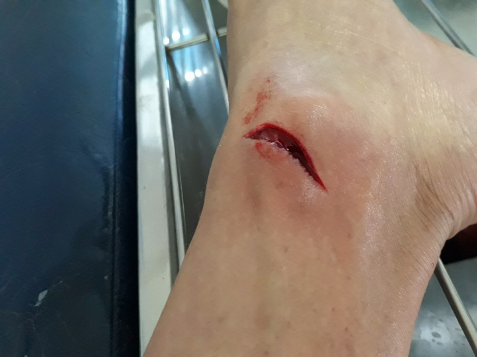
Photo Gallery
Care Plans

Laceration/Skin tear with good skin turgor

A patient has received a blunt force trauma causing a laceration/skin tear and is actively bleeding. Their skin has good skin turgor and patient is not elderly

 Swipe 
Step 1

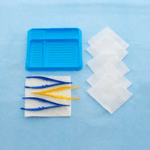
Prepare Sterile Field

Prepare your sterile field with your sterile products
Products Used
Step 2

Clean wound bed

Clean the wound bed thoroughly removing any old clots or debris
Products Used
Step 3

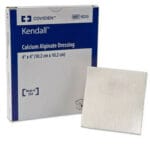
Apply Calcium Alginate

Pack the laceration with the calcium alginate. It may be cut to fill the cavity
Products Used
Step 4

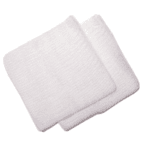
Apply Gauze

Apply gauze over the calcium alginate and apply digital pressure for 3-5 minutes.
Products Used
Step 5

Anticoagulants

Is does your patient on any anticoagulants or anti-platelet drugs? If so apply digital pressure for a further 5 minutes
Products Used
Step 6

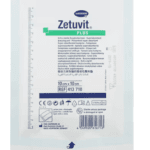
Apply Zetuvit

Once the wound has stopped actively bleeding apply the zetuvit
Products Used
Step 7

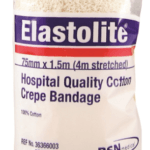
Secure dressing

Wrap the area with cotton bandage and crepe making sure there is appropriate pressure over the wound. ** The idea is that the pressure over the laceration from the cotton bandage and crepe is transferred onto the packed gauze and then onto the wound bed **
Products Used
Step 8

Educate the patient and check for neurovascular obs

Educate the patient on how much is an appropriate about of bleeding and check their capillary refill.
Products Used

Inflamed Laceration/Skin Tear

A patient has received a blunt force trauma causing a laceration/skin tear which is not actively bleeding and has become inflammed.

 Swipe 
Step 1

Prepare Sterile Field

Prepare your sterile field with your sterile products
Products Used
Step 2

Clean wound bed

Clean the wound bed thoroughly removing any old clots or debris
Products Used
Step 3

Wound Swab

Consider taking a wound care swab if their is purulent exudate or a concern around biofilm or bacterial burden
Products Used
Step 4

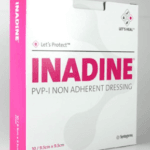
Apply Inadine

Apply Inadine to the inflamed area
Products Used
Step 5

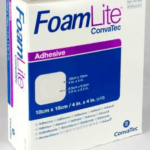
Apply Foamlite

Remove the backing of the Foamlite and then palace the STICKY side down.
Products Used