


Associated References
Photo Gallery
Main Article
Aetiology
Skin stripping, characterized by the removal of the outermost layer of skin, can be attributed to a variety of mechanical, chemical, and environmental factors. Mechanical causes often arise from excessive friction or pressure, which can occur during routine activities or medical procedures, such as the use of adhesive dressings or tape for wound management (Berekméri et al., 2019). Chemical factors include the application of irritants or allergens, such as certain topical medications or cleaning agents, which can compromise the skin barrier and lead to stripping (Bowen et al., 2015). Environmental factors, such as humidity and temperature, also play a crucial role; for instance, dry conditions can exacerbate skin barrier dysfunction, making the skin more susceptible to stripping (Menegueti et al., 2019).
Moreover, the pathophysiological mechanisms underlying skin stripping involve alterations in the skin’s structural integrity. The stratum corneum, the outermost layer of the skin, becomes compromised due to the loss of lipids and proteins essential for maintaining skin hydration and barrier function (Apriani et al., 2019). This disruption can lead to increased transepidermal water loss (TEWL), further aggravating the condition and potentially leading to secondary infections (Wootton et al., 2018).
Prevalence
Recent studies indicate that skin stripping is a significant concern in healthcare settings, particularly among patients with compromised skin integrity. A systematic review highlighted that skin stripping is prevalent among patients receiving long-term care, with rates varying based on the population and care setting (Dijxhoorn et al., 2020). For example, in a rural healthcare context, skin diseases, including skin stripping, were reported to affect a substantial proportion of the population, particularly among vulnerable groups such as the elderly and those with chronic conditions (Wilson et al., 2015).
Additionally, the prevalence of skin stripping is influenced by the use of invasive devices and prolonged immobilization in hospital settings, which can lead to pressure ulcers and subsequent skin stripping (Adams et al., 2015). The burden of healthcare-associated infections (HAIs) linked to skin stripping is also notable, as these infections can complicate recovery and prolong hospital stays (Ruscio et al., 2019).
Pathophysiological Changes
The pathophysiological changes associated with skin stripping involve both structural and functional alterations in the skin. The mechanical removal of the stratum corneum can lead to a decrease in the skin’s barrier function, resulting in increased permeability to allergens and pathogens (Guttman‐Yassky et al., 2019). This compromised barrier can trigger inflammatory responses, leading to conditions such as dermatitis or eczema (Miliani et al., 2015).
Moreover, the loss of lipids and proteins during skin stripping can disrupt the skin’s natural moisturizing factors, resulting in dryness and irritation (Leung et al., 2019). Studies have shown that patients with atopic dermatitis exhibit significant differences in the composition of their stratum corneum compared to healthy individuals, indicating that skin stripping can exacerbate underlying skin conditions (Clausen et al., 2018).
Treatments
Evidence-based interventions for managing skin stripping focus on restoring the skin barrier and preventing further damage. Emollients and moisturizers are commonly recommended to enhance skin hydration and repair the barrier function (Dyjack et al., 2018). Additionally, the use of barrier creams can provide a protective layer against irritants and friction (Alemu et al., 2020).
In cases where skin stripping is associated with underlying conditions, such as eczema or psoriasis, targeted therapies may be necessary. Topical corticosteroids and calcineurin inhibitors have been shown to reduce inflammation and promote healing in affected areas (Ming et al., 2020). Furthermore, the implementation of proper wound care protocols, including the use of non-adhesive dressings, can minimize the risk of skin stripping in patients with compromised skin integrity (Piervirgili et al., 2014).
Precautions with Treatments
While various treatments exist for skin stripping, clinicians must exercise caution to avoid exacerbating the condition. Certain topical agents, particularly those containing alcohol or strong fragrances, can further irritate the skin and should be avoided (Pearlman et al., 2021). Additionally, the use of occlusive dressings may trap moisture and heat, potentially leading to maceration and worsening skin stripping (Yotsu et al., 2018).
Clinicians should also be aware of the potential for allergic reactions to topical treatments, which can complicate the management of skin stripping (Golan, 2019). Therefore, conducting patch tests or using hypoallergenic products may be prudent, especially in patients with a history of sensitive skin (Lydeamore et al., 2020).
Diagnostic Tests Available
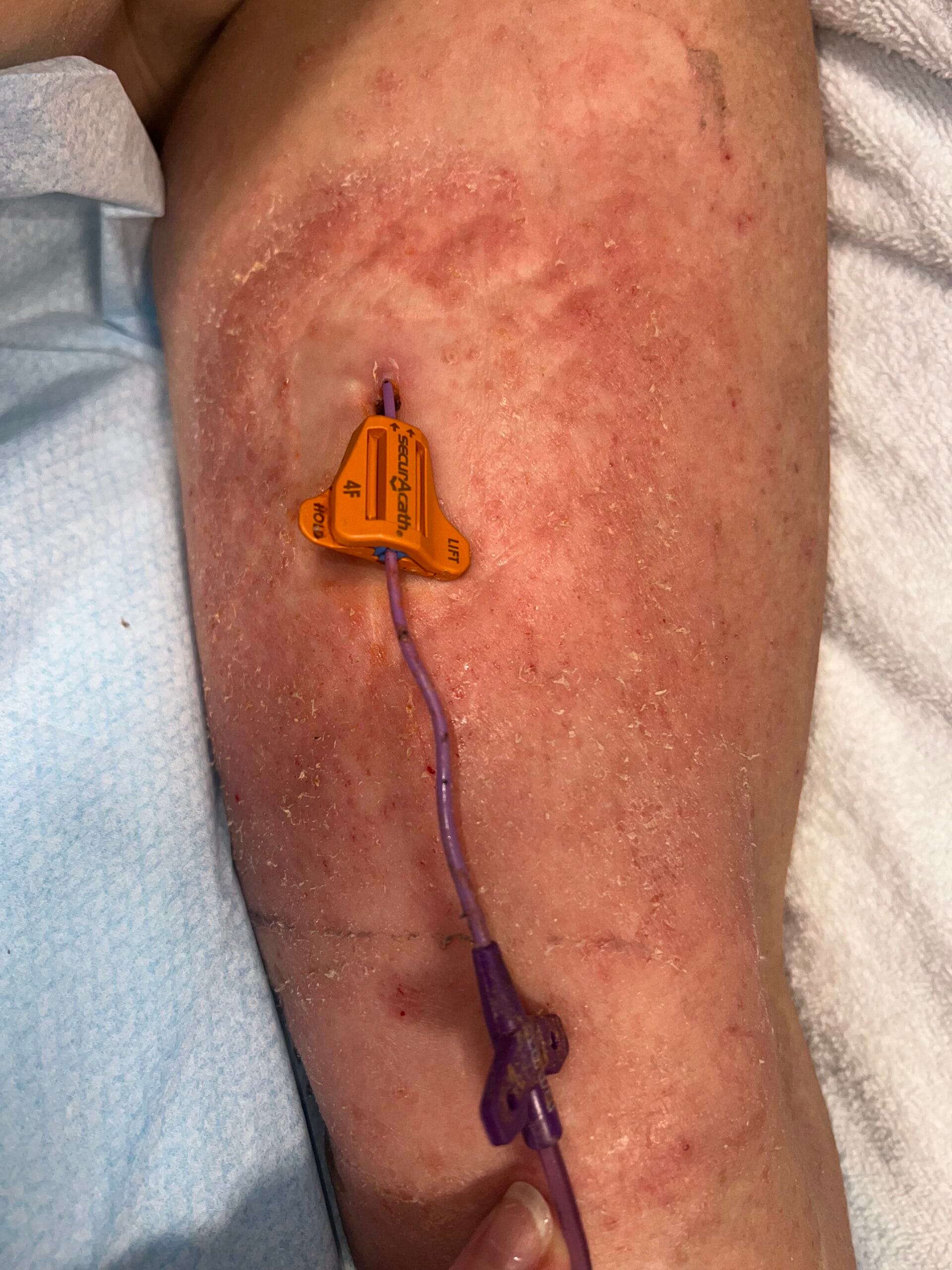
Diagnosing skin stripping involves a comprehensive assessment of the patient’s history, clinical presentation, and, when necessary, laboratory tests. Visual inspection of the skin can reveal characteristic signs of stripping, such as redness, scaling, and loss of integrity (Almutairi et al., 2017). In some cases, skin biopsy may be warranted to rule out underlying dermatological conditions (DeKoninck & Christenbery, 2015).
Non-invasive techniques, such as tape stripping, can also be employed to assess the integrity of the stratum corneum and evaluate the presence of inflammatory markers (Gois et al., 2017). This method allows for the collection of skin samples without the need for invasive procedures, making it a valuable tool in clinical practice (Hendrickx et al., 2020).
Contributing Factors
Several intrinsic and extrinsic factors contribute to the risk of skin stripping. Intrinsic factors include genetic predispositions, such as a family history of skin conditions, and comorbidities like diabetes or vascular diseases that can impair skin healing. Extrinsic factors often relate to clinical practices, including the inappropriate use of adhesive dressings or failure to adhere to proper skin care protocols.
Environmental factors, such as exposure to harsh weather conditions or occupational hazards, can also predispose individuals to skin stripping. Additionally, the psychological stress associated with chronic illness can lead to behaviors that exacerbate skin conditions, such as excessive scratching or neglecting skin care.
Conclusion
In conclusion, skin stripping is a multifaceted issue that requires a comprehensive understanding of its aetiology, prevalence, pathophysiological changes, treatment options, precautions, diagnostic methods, and contributing factors. By equipping healthcare professionals with this knowledge, we can enhance patient care and mitigate the risks associated with skin stripping in clinical settings.
References:
- Adams, S., Ehrlich, R., Baatjies, R., Zyl-Smit, R., Said-Hartley, Q., Dawson, R., … & Dheda, K. (2015). Incidence of occupational latent tuberculosis infection in south african healthcare workers. European Respiratory Journal, 45(5), 1364-1373. https://doi.org/10.1183/09031936.00138414
- Alemu, A., Endalamaw, A., & Bayih, W. (2020). The burden of healthcare-associated infection in ethiopia: a systematic review and meta-analysis. Tropical Medicine and Health, 48(1). https://doi.org/10.1186/s41182-020-00263-2
- Almutairi, D., LeBlanc, K., & Alavi, A. (2017). Peristomal skin complications: what dermatologists need to know. International Journal of Dermatology, 57(3), 257-264. https://doi.org/10.1111/ijd.13710
- Apriani, L., McAllister, S., Sharples, K., Alisjahbana, B., Ruslami, R., Hill, P., … & Menzies, D. (2019). Latent tuberculosis infection in healthcare workers in low- and middle-income countries: an updated systematic review. European Respiratory Journal, 53(4), 1801789. https://doi.org/10.1183/13993003.01789-2018
- Berekméri, A., Tiganescu, A., Alase, A., Vital, E., Stacey, M., & Wittmann, M. (2019). Non-invasive approaches for the diagnosis of autoimmune/autoinflammatory skin diseases—a focus on psoriasis and lupus erythematosus. Frontiers in Immunology, 10. https://doi.org/10.3389/fimmu.2019.01931
- Bowen, A., Mahé, A., Hay, R., Andrews, R., Steer, A., Tong, S., … & Carapetis, J. (2015). The global epidemiology of impetigo: a systematic review of the population prevalence of impetigo and pyoderma. Plos One, 10(8), e0136789. https://doi.org/10.1371/journal.pone.0136789
- Clausen, M., Slotved, H., Krogfelt, K., & Agner, T. (2018). Measurements of amps in stratum corneum of atopic dermatitis and healthy skin–tape stripping technique. Scientific Reports, 8(1). https://doi.org/10.1038/s41598-018-20204-8
- DeKoninck, B. and Christenbery, T. (2015). Skin cancer screening in the medically underserved population: a unique opportunity for apns to make a difference. Journal of the American Association of Nurse Practitioners, 27(9), 501-506. https://doi.org/10.1002/2327-6924.12216
- Dijxhoorn, A., Brom, L., Linden, Y., Leget, C., & Raijmakers, N. (2020). Prevalence of burnout in healthcare professionals providing palliative care and the effect of interventions to reduce symptoms: a systematic literature review. Palliative Medicine, 35(1), 6-26. https://doi.org/10.1177/0269216320956825
- Dyjack, N., Goleva, E., Rios, C., Kim, B., Bin, L., Taylor, P., … & Leung, D. (2018). Minimally invasive skin tape strip rna sequencing identifies novel characteristics of the type 2–high atopic dermatitis disease endotype. Journal of Allergy and Clinical Immunology, 141(4), 1298-1309. https://doi.org/10.1016/j.jaci.2017.10.046
- Gois, P., Ferreira, D., Olenski, S., & Seguro, A. (2017). Vitamin d and infectious diseases: simple bystander or contributing factor?. Nutrients, 9(7), 651. https://doi.org/10.3390/nu9070651
- Golan, Y. (2019). Current treatment options for acute skin and skin-structure infections. Clinical Infectious Diseases, 68(Supplement_3), S206-S212. https://doi.org/10.1093/cid/ciz004
- Guttman‐Yassky, E., Diaz, A., Pavel, A., Fernandes, M., Lefferdink, R., Erickson, T., … & Paller, A. (2019). Use of tape strips to detect immune and barrier abnormalities in the skin of children with early-onset atopic dermatitis. Jama Dermatology, 155(12), 1358. https://doi.org/10.1001/jamadermatol.2019.2983
- Hendrickx, D., Amgarth-Duff, I., Bowen, A., Carapetis, J., Chibawe, R., Samson, M., … & Walker, R. (2020). Barriers and enablers of health service utilisation for childhood skin infections in remote aboriginal communities of western australia. International Journal of Environmental Research and Public Health, 17(3), 808. https://doi.org/10.3390/ijerph17030808
- Leung, D., Calatroni, A., Zaramela, L., LeBeau, P., Dyjack, N., Brar, K., … & Goleva, E. (2019). The nonlesional skin surface distinguishes atopic dermatitis with food allergy as a unique endotype. Science Translational Medicine, 11(480). https://doi.org/10.1126/scitranslmed.aav2685
- Lydeamore, M., Campbell, P., Price, D., Wu, Y., Marcato, A., Cuningham, W., … & McCaw, J. (2020). Estimation of the force of infection and infectious period of skin sores in remote australian communities using interval-censored data. Plos Computational Biology, 16(10), e1007838. https://doi.org/10.1371/journal.pcbi.1007838
- Menegueti, M., Laüs, A., Ciol, M., Auxiliadora‐Martins, M., Basile-Filho, A., Gir, E., … & Bellissimo-Rodrigues, F. (2019). Glycerol content within the who ethanol-based handrub formulation: balancing tolerability with antimicrobial efficacy. Antimicrobial Resistance and Infection Control, 8(1). https://doi.org/10.1186/s13756-019-0553-z
- Miliani, K., Migueres, B., Verjat-Trannoy, D., Thiolet, J., Vaux, S., & Astagneau, P. (2015). National point prevalence survey of healthcare-associated infections and antimicrobial use in french home care settings, may to june 2012. Eurosurveillance, 20(27). https://doi.org/10.2807/1560-7917.es2015.20.27.21182
- Ming, D., Sangkaew, S., Chanh, H., Nhat, P., Yacoub, S., Georgiou, P., … & Holmes, A. (2020). Continuous physiological monitoring using wearable technology to inform individual management of infectious diseases, public health and outbreak responses. International Journal of Infectious Diseases, 96, 648-654. https://doi.org/10.1016/j.ijid.2020.05.086
- Pearlman, R., Wilkerson, A., Ferris, T., Griffin, D., Cobb, E., McCowan, H., … & Nahar, V. (2021). Skin cancer knowledge, attitudes, and practices among non‐medical skin care professionals: a narrative review of cross‐sectional and interventional studies. Journal of Cosmetic Dermatology, 20(8), 2437-2457. https://doi.org/10.1111/jocd.14260
- Piervirgili, G., Petracca, F., & Merletti, R. (2014). A new method to assess skin treatments for lowering the impedance and noise of individual gelled ag–agcl electrodes. Physiological Measurement, 35(10), 2101-2118. https://doi.org/10.1088/0967-3334/35/10/2101
- Ruscio, F., Guzzetta, G., Bjørnholt, J., Leegaard, T., Moen, A., Merler, S., … & Blasio, B. (2019). Quantifying the transmission dynamics of mrsa in the community and healthcare settings in a low-prevalence country. Proceedings of the National Academy of Sciences, 116(29), 14599-14605. https://doi.org/10.1073/pnas.1900959116
- Wilson, K., Ovington, P., & Dean, D. (2015). A low-cost inkjet-printed glucose test strip system for resource-poor settings. Journal of Diabetes Science and Technology, 9(6), 1275-1281. https://doi.org/10.1177/1932296815589755
- Wootton, C., Bell, S., Philavanh, A., Phommachack, K., Soukavong, M., Kidoikhammouan, S., … & Mayxay, M. (2018). Assessing skin disease and associated health-related quality of life in a rural lao community. BMC Dermatology, 18(1). https://doi.org/10.1186/s12895-018-0079-8
- Yotsu, R., Kouadio, K., Vagamon, B., Konan, N., Akpa, A., Yao, A., … & Asiedu, K. (2018). Skin disease prevalence study in schoolchildren in rural côte d’ivoire: implications for integration of neglected skin diseases (skin ntds). Plos Neglected Tropical Diseases, 12(5), e0006489. https://doi.org/10.1371/journal.pntd.0006489