


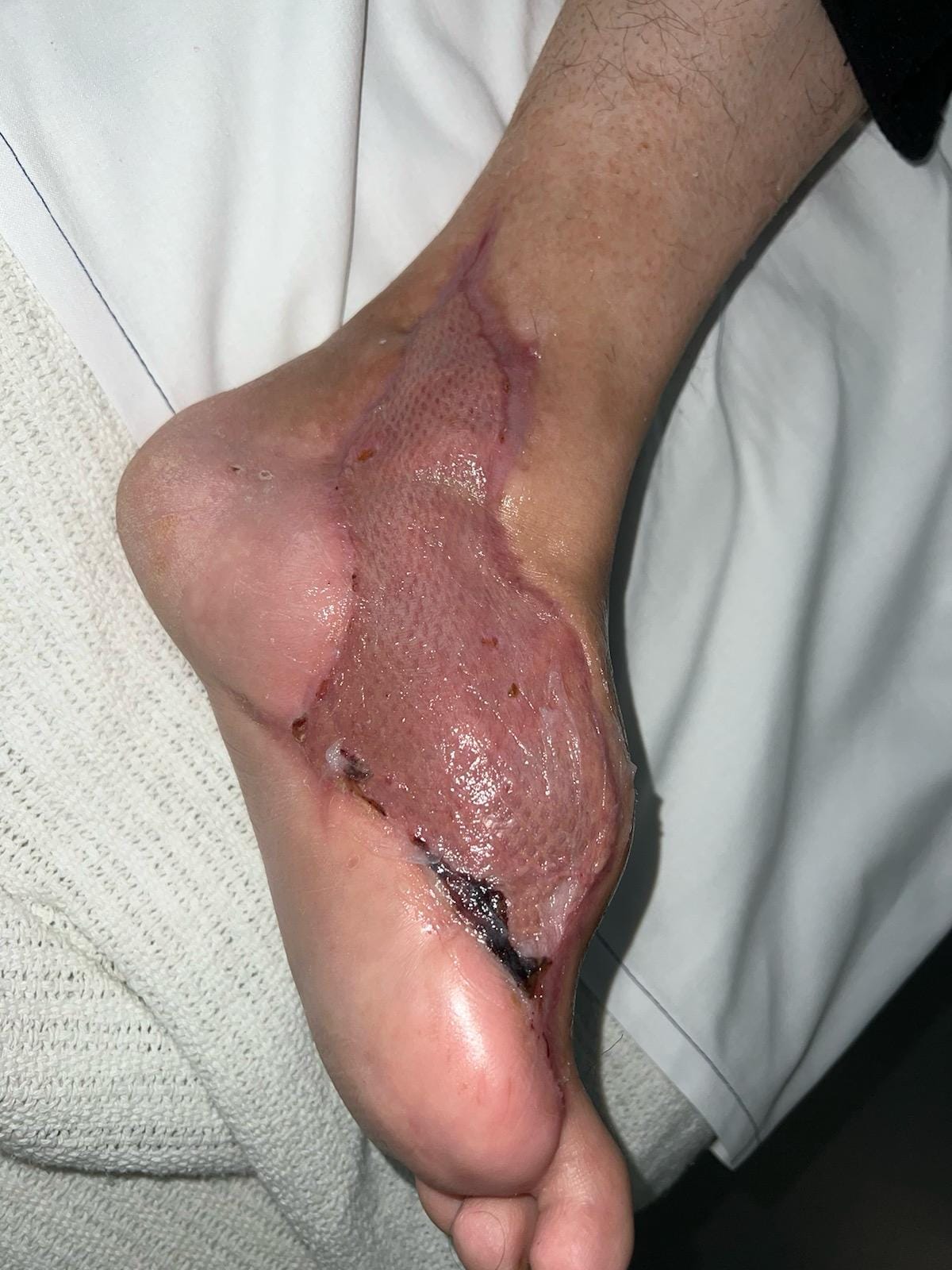
Photo Gallery
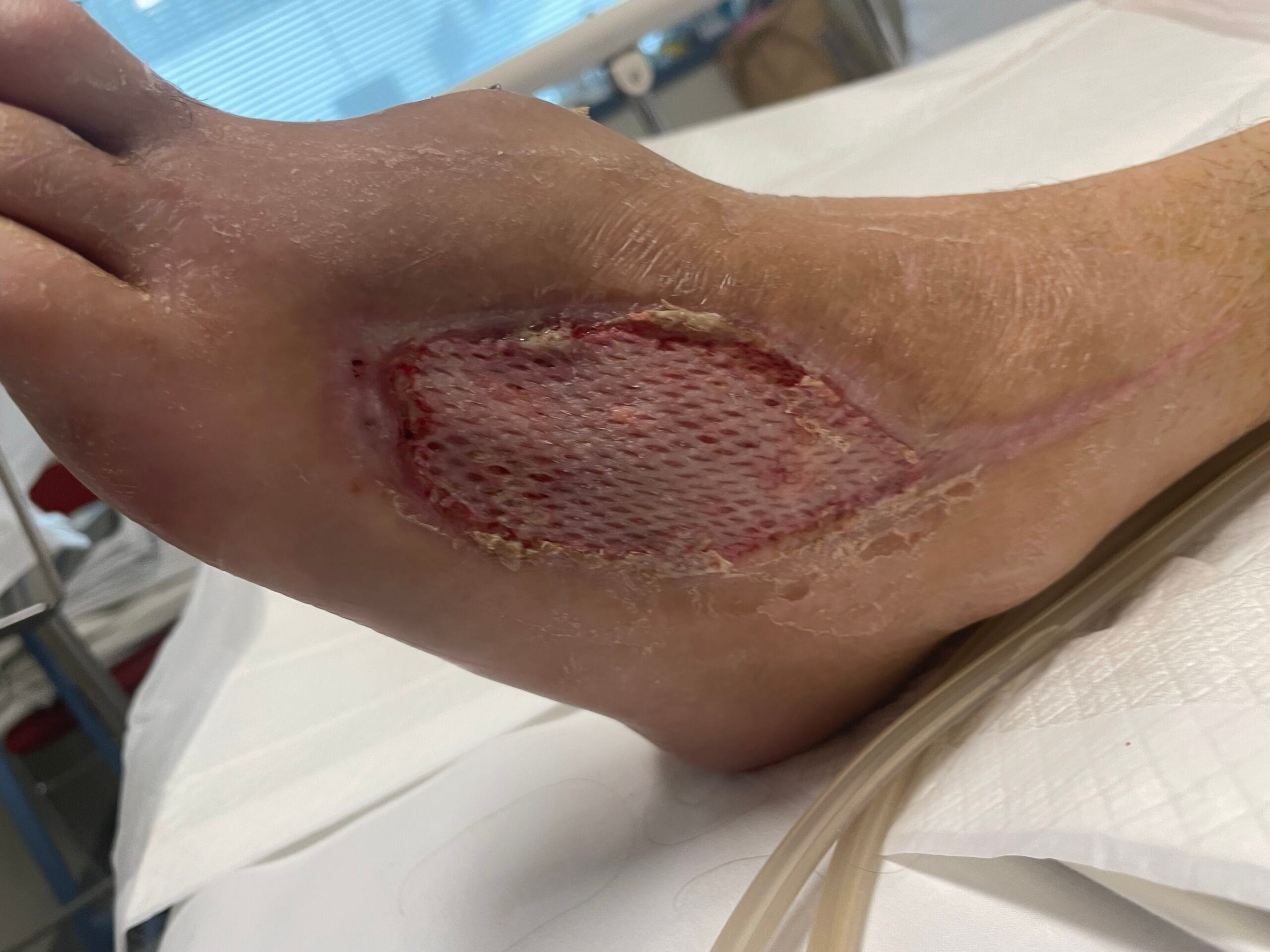
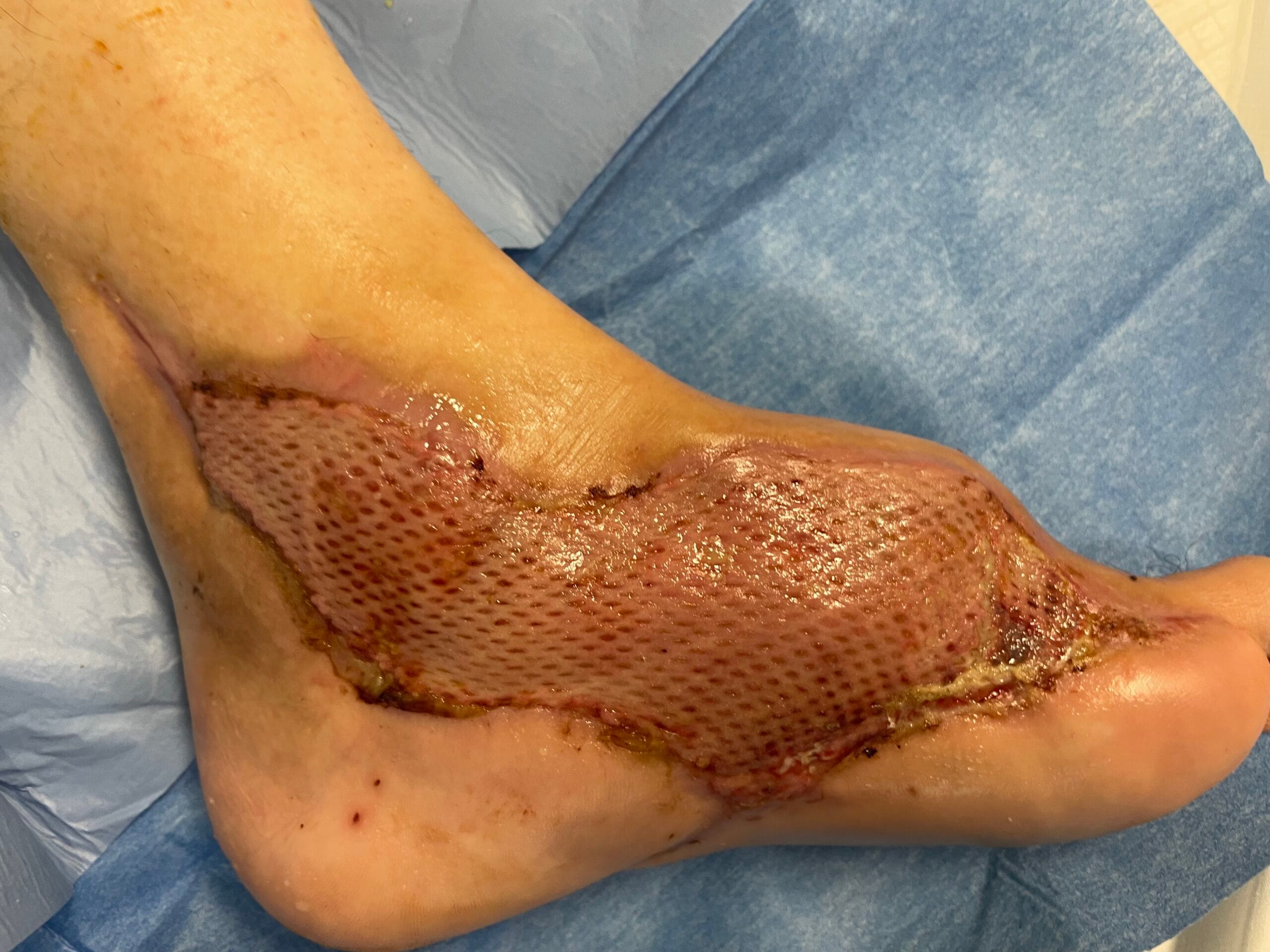
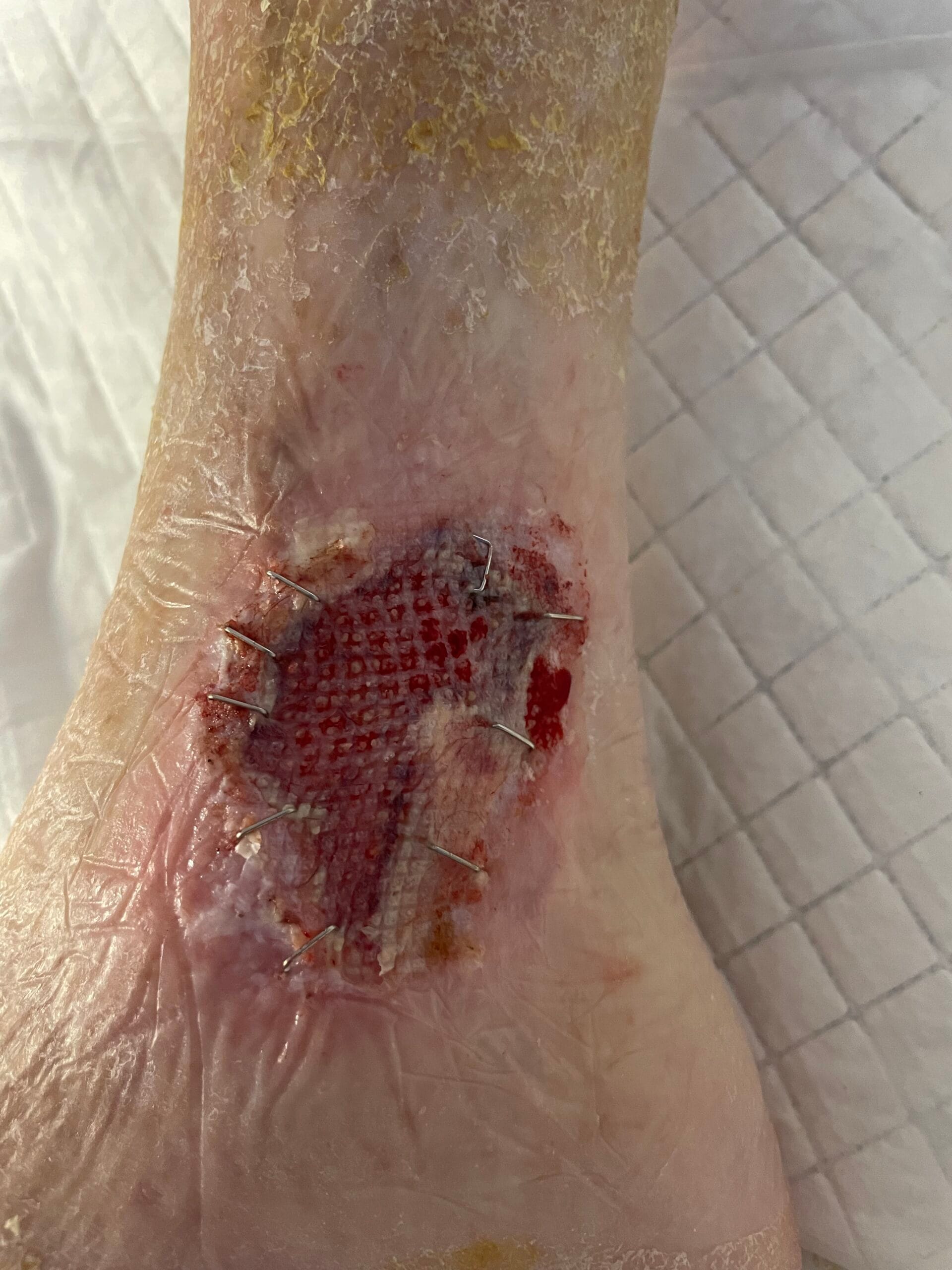
Main Article
Overview and History
Skin grafting is a critical technique in plastic and reconstructive surgery, with a history that dates back thousands of years. The earliest documented use of skin grafts can be traced to ancient India, where Sushruta, often referred to as the “father of surgery,” described methods for reconstructing noses using skin from the forehead (Efthymiou & Georgolios, 2022). Over the centuries, advancements in surgical techniques and understanding of skin biology have significantly improved the efficacy and safety of skin grafting.
In the 19th century, the introduction of anesthesia and antiseptic techniques revolutionized surgical practices, allowing for more complex procedures, including skin grafting (Mohanty, 2024). The 20th century saw further innovations, such as the development of split-thickness skin grafts (STSG) and full-thickness skin grafts (FTSG), which provided surgeons with versatile options for wound coverage and reconstruction (Kim et al., 2023). The advent of microsurgery in the late 20th century allowed for the transplantation of composite grafts, including skin and underlying tissues, enhancing the aesthetic and functional outcomes of reconstructive surgeries (Uoya et al., 2020).
Recent advancements have focused on improving graft survival rates and minimizing complications. Techniques such as the use of platelet-rich plasma (PRP) and dermal regenerative templates have emerged to enhance graft integration and healing (Juviler et al., 2019). The evolution of skin grafting continues to be influenced by technological advancements, including 3D printing and bioengineering, which hold promise for future applications in regenerative medicine (Yoo, 2024).
Classification of Skin Grafts
Skin grafts can be classified based on several criteria, including the thickness of the graft, the source of the graft, and the method of application. The primary classifications include:
– Split-Thickness Skin Grafts (STSG): These grafts consist of the epidermis and a portion of the dermis. They are commonly used for larger wounds due to their ability to cover extensive areas and promote faster healing (Dong & Wang, 2017).
– Full-Thickness Skin Grafts (FTSG): Comprising the entire epidermis and dermis, FTSGs are used for smaller, more complex wounds where aesthetic outcomes are critical. They provide better cosmetic results but require a more significant donor site (Oyama et al., 2015).
– Composite Grafts: These involve the transplantation of skin along with underlying tissues such as cartilage or fat. They are often used in reconstructive surgeries of the face and ears (Ito et al., 2020).
– Autografts, Allografts, and Xenografts: Autografts are harvested from the patient’s own body, while allografts are taken from a donor of the same species, and xenografts are sourced from different species. Autografts are preferred due to their lower rejection rates (Lee, 2024).
Applications of Each Skin Graft Type
The clinical applications of skin grafts vary widely, depending on the type of graft used and the specific needs of the patient.
– Split-Thickness Skin Grafts (STSG): These are frequently employed in burn treatment, chronic wound management, and reconstructive surgery following trauma or oncological resections. Their ability to cover large areas makes them ideal for extensive skin loss (Ishii, 2023).
– Full-Thickness Skin Grafts (FTSG): These grafts are commonly used in facial reconstructions, particularly for defects resulting from skin cancer excisions or traumatic injuries. Their superior cosmetic outcomes make them suitable for visible areas (Lee et al., 2015).
– Composite Grafts: These are particularly useful in reconstructing complex defects, such as those in the nasal region or ear, where both skin and underlying structures are required for functional and aesthetic restoration (Chiacchio et al., 2017).
– Allografts and Xenografts: While these are often used as temporary solutions to cover wounds, they can also serve as a bridge to definitive reconstruction with autografts, particularly in cases of extensive tissue loss (Kumbla et al., 2015).
Surgical Techniques
The surgical techniques for harvesting and applying skin grafts are critical to their success.
– Donor Site Selection: The choice of donor site is paramount. For STSGs, areas such as the thigh or abdomen are commonly used, while FTSGs may be harvested from the forearm or postauricular region (Pace et al., 2022). The donor site should provide skin that matches the recipient site in color and texture to minimize aesthetic discrepancies.
– Harvesting Techniques: STSGs are typically harvested using a dermatome, allowing for uniform thickness, while FTSGs are excised with a scalpel, ensuring complete dermal inclusion (Therattil et al., 2017). The harvested graft must be carefully handled to prevent desiccation and damage.
– Transfer Techniques: Grafts can be secured using sutures, staples, or adhesive agents. The choice of fixation method can influence graft survival, with sutures providing more stability in high-mobility areas (Tolba et al., 2014).
Postoperative Care and Monitoring
Postoperative care is essential for the success of skin grafting procedures.
– Monitoring for Graft Viability: Regular assessments of the graft site are crucial. Signs of graft failure include discoloration, lack of adherence, and necrosis. Early intervention can salvage compromised grafts (Sun & Patel, 2021).
– Prevention and Management of Complications: Complications such as ischemia, infection, and necrosis must be proactively managed. Antibiotic prophylaxis and careful wound care are vital to prevent infections (Pinjala et al., 2015). Ischemia can be mitigated by ensuring adequate vascular supply to the graft, while necrosis may require surgical intervention to remove non-viable tissue (Tapan, 2023).
– Long-term Care Considerations: Patients may require physical therapy to maintain mobility and function, particularly in areas like the hands and joints. Scar management strategies, including silicone gel sheets and pressure garments, can improve cosmetic outcomes and reduce hypertrophic scarring (Iida & Watanabe, 2016).
References:
- Chiacchio, N., Noriega, L., Ocampo‐Garza, J., & Chiacchio, N. (2017). Digital mucous cyst: surgical closure technique based on self‐grafting using skin overlying the lesion. International Journal of Dermatology, 56(4), 464-466. https://doi.org/10.1111/ijd.13527
- Dong, Y. and Wang, Y. (2017). The use of a dorsal double-wing flap without skin grafts for congenital syndactyly treatment. Medicine, 96(30), e7639. https://doi.org/10.1097/md.0000000000007639
- Efthymiou, V. and Georgolios, A. (2022). Techniques to enhance survival of auricular composite graft in reconstruction of skin defects of the nasal ala and nasal sidewall: a case report. World Journal of Plastic Surgery, 11(3), 84-88. https://doi.org/10.52547/wjps.11.3.84
- Iida, N. and Watanabe, A. (2016). The modified 3-square flap method for reconstruction of toe syndactyly. Plastic and Reconstructive Surgery Global Open, 4(7), e793. https://doi.org/10.1097/gox.0000000000000735
- Ishii, N. (2023). Geometric wire-frame fixation of skin grafting for lip reconstruction. Plastic and Reconstructive Surgery Global Open, 11(9), e5248. https://doi.org/10.1097/gox.0000000000005248
- Ito, R., Maeda, T., Osawa, M., Hayashi, T., Funayama, E., Yamamoto, Y., … & Murao, N. (2020). Pathological findings at the skin graft site after excision of hidradenitis suppurativa. International Journal of Surgical Wound Care, 1(2), 88-91. https://doi.org/10.36748/ijswc.1.2_88
- Juviler, P., Patel, A., & Qi, Y. (2019). Infiltrative squamous cell carcinoma in hidradenitis suppurativa: a case report for early surgical intervention. International Journal of Surgery Case Reports, 55, 50-53. https://doi.org/10.1016/j.ijscr.2019.01.006
- Kim, Y., Park, J., Yi, H., Park, J., & Kim, H. (2023). Is the retroauricular region a suitable donor site for full-thickness skin grafting in the era of mask wearing?. Archives of Craniofacial Surgery, 24(2), 66-72. https://doi.org/10.7181/acfs.2023.00164
- Kumbla, P., Yuen, J., & Tait, M. (2015). Applying a dermal regenerative template in management of congenital melanocytic nevi of the hand. Plastic and Reconstructive Surgery Global Open, 3(9), e515. https://doi.org/10.1097/gox.0000000000000483
- Lee, M. (2024). Comparison of local flaps versus skin grafts as reconstruction methods for defects in the medial canthal region. Archives of Craniofacial Surgery, 25(3), 133-140. https://doi.org/10.7181/acfs.2024.00220
- Lee, Y., Shin, D., Choi, H., Kim, J., Lee, M., Kim, S., … & Uhm, K. (2015). Columella lengthening with a full-thickness skin graft for secondary bilateral cleft lip and nose repair. Archives of Plastic Surgery, 42(06), 704-708. https://doi.org/10.5999/aps.2015.42.6.704
- Mohanty, S. (2024). Improving cosmetic and functional outcome in case of post burn contracture of hand and fingers by using de-epithelized plantar skin graft. International Journal of Research in Orthopaedics, 10(2), 314-317. https://doi.org/10.18203/issn.2455-4510.intjresorthop20240410
- Oyama, A., Kimura, C., Murao, N., & Takahashi, K. (2015). Promising long-term outcomes of the reused skin-graft technique for chronic gluteal hidradenitis suppurativa. Journal of Plastic Reconstructive & Aesthetic Surgery, 68(9), 1268-1275. https://doi.org/10.1016/j.bjps.2015.05.025
- Pace, A., Rossetti, V., Visconti, I., Milani, A., Iannella, G., Cocuzza, S., … & Magliulo, G. (2022). Thiersch graft follow-up with narrow band imaging for acquired atresia of the external auditory canal: canaloplasty with thiersch graft vs vascularization evaluated with narrow band imaging. Bosnian Journal of Basic Medical Sciences. https://doi.org/10.17305/bjbms.2021.6876
- Pinjala, P., T, R., Ch, M., & Prasad, D. (2015). Ultra thin epidermal skin grafting for stable viti ligo : a cost effective and cosmetically satisfying treatment option. Journal of Evolution of Medical and Dental Sciences, 4(43), 7436-7441. https://doi.org/10.14260/jemds/2015/1079
- Sun, L. and Patel, A. (2021). Outcomes of split vs full-thickness skin grafts in scalp reconstruction in outpatient local anaesthetic theatre. Scars Burns & Healing, 7. https://doi.org/10.1177/20595131211056542
- Tapan, M. (2023). Let-down rhinoplasty in patients with cleft lip nose. Annals of Plastic Surgery, 91(5), 564-570. https://doi.org/10.1097/sap.0000000000003681
- Therattil, P., Kass, W., Sood, A., & Datiashvili, R. (2017). Alar rim reconstruction: a case report and review of the literature. Madridge Journal of Case Reports and Studies, 1(1), 11-15. https://doi.org/10.18689/mjcrs-1000103
- Tolba, A., Nasr, M., Abo-Hashem, A., Abdelnaby, M., & Ibrahim, E. (2014). Management of post-circumcision trapped penis with glanular amputation. Surgical Science, 05(07), 309-313. https://doi.org/10.4236/ss.2014.57052
- Uoya, Y., Ishii, N., Sakai, S., Kiuchi, T., Uno, T., & Kishi, K. (2020). A novel technique to achieve rapid wound healing of donor site wounds in split-thickness skin grafts of a patient undergoing anticoagulation therapy. The International Journal of Lower Extremity Wounds, 20(2), 162-166. https://doi.org/10.1177/1534734620938169
- Yoo, M. (2024). Wide cortical drilling and anterior-based periosteal flap reconstruction: innovative approach for acquired stenosis of external auditory canal. Korean Journal of Otorhinolaryngology – Head and Neck Surgery, 67(5), 305-310. https://doi.org/10.3342/kjorl-hns.2024.00171