


Quick Overview
Associated References
Photo Gallery
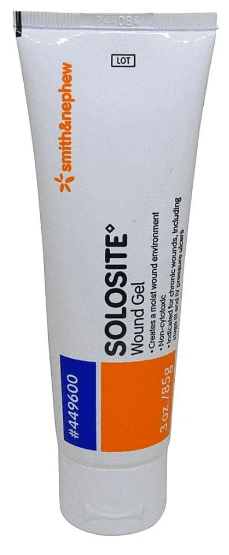
Main Article
History of Hydrogel Dressings
The evolution of hydrogel dressings is a fascinating journey that reflects advancements in materials science and wound care practices. The concept of hydrogels dates back to the early 1960s when Wichterle and Lim synthesized the first hydrogel by polymerizing methyl-2-hydroxyethyl methacrylate, which was initially used for contact lenses (Liu et al., 2022). This pioneering work laid the groundwork for the development of hydrogels in various medical applications, particularly in wound care. Over the decades, the understanding of hydrogels has expanded significantly, leading to the incorporation of various biocompatible materials, including natural polysaccharides and synthetic polymers, to enhance their properties (Andryukov et al., 2020).
In recent years, the focus has shifted towards creating hydrogels that not only provide a moist wound environment but also possess antibacterial properties and promote healing through bioactive compounds (Deng et al., 2021; Xie et al., 2022). The introduction of nanotechnology has further revolutionized hydrogel dressings, allowing for the incorporation of nanoparticles that can enhance mechanical strength and antibacterial efficacy (Luo et al., 2023). As a result, modern hydrogels are designed to meet specific clinical needs, such as managing exudate levels and promoting autolytic debridement, thereby improving patient outcomes in wound healing (Seiser et al., 2021).
Mechanism of Action
Hydrogel dressings operate through several key mechanisms that facilitate effective wound healing. Primarily, they maintain a moist wound environment, which is crucial for promoting cellular activities involved in healing, such as epithelialization and granulation tissue formation (Seiser et al., 2021). The high water content of hydrogels allows them to absorb exudate while preventing the wound from drying out, thus reducing pain and promoting faster healing (Zhang et al., 2020).
Moreover, hydrogels can form a gel-like consistency upon contact with wound exudate, which helps to create a protective barrier against external contaminants while allowing for gas exchange (Zhang et al., 2020). This gel formation is essential for autolytic debridement, as it facilitates the breakdown of necrotic tissue through the body’s natural processes (Seiser et al., 2021). Additionally, some hydrogels are engineered to release bioactive substances, such as growth factors or antimicrobial agents, which can further enhance the healing process and reduce the risk of infection (Moon et al., 2019).
Clinical Uses
Hydrogel dressings are versatile and can be applied to a variety of wound types, making them a valuable tool in clinical practice. They are particularly effective for managing moderate exuding wounds, such as those associated with venous ulcers, pressure ulcers, and diabetic foot ulcers or wounds that require a moist wound environment to be externally created(Zhao, 2024). The ability of hydrogels to absorb excess exudate while maintaining moisture makes them ideal for these challenging wound types, where moisture balance is critical for healing (Zhang et al., 2020).
Moreover, hydrogels are suitable for use on infected wounds due to their capacity to create a moist environment that supports healing while also providing a barrier against bacterial invasion (Zhang et al., 2022). Recent studies have demonstrated that hydrogels can significantly improve healing rates in chronic wounds, highlighting their importance in modern wound care protocols (Zhao, 2024; Moon et al., 2019). Additionally, their biocompatibility and ease of application make them a preferred choice for both acute and chronic wound management (Seiser et al., 2022).
Precautions for Safe and Effective Use
Potential complications associated with hydrogel dressings include maceration of surrounding skin due to excessive moisture and allergic reactions to specific components within the hydrogel formulation (Choipang et al., 2020). Therefore, regular monitoring of the wound and surrounding tissue is essential to prevent adverse effects and ensure optimal healing conditions (Stan et al., 2021). Furthermore, proper education for patients on the care and management of their dressings is crucial to enhance adherence and promote successful healing outcomes (Stan et al., 2021).
Conclusion
Hydrogel dressings represent a significant advancement in wound care, offering a range of benefits that facilitate healing while minimizing complications. Their history reflects a continuous evolution driven by scientific research and clinical needs, leading to the development of sophisticated formulations that cater to diverse wound types. Understanding the mechanisms of action, clinical applications, and safe usage practices of hydrogel dressings is essential for healthcare professionals to optimize patient care and improve healing outcomes.
References:
- Andryukov, B., Беседнова, Н., Кузнецова, Т., Ermakova, S., Zvyagintseva, T., Chingizova, E., … & Smolina, T. (2020). Sulfated polysaccharides from marine algae as a basis of modern biotechnologies for creating wound dressings: current achievements and future prospects. Biomedicines, 8(9), 301. https://doi.org/10.3390/biomedicines8090301
- Choipang, C., Buntum, T., Chuysinuan, P., Techasakul, S., Supaphol, P., & Suwantong, O. (2020). Gelatin scaffolds loaded with asiaticoside/2‐hydroxypropyl‐β‐cyclodextrin complex for use as wound dressings. Polymers for Advanced Technologies, 32(3), 1187-1193. https://doi.org/10.1002/pat.5166
- Deng, X., Huang, B., Wang, Q., Wu, W., Coates, P., Sefat, F., … & Zhang, X. (2021). A mussel-inspired antibacterial hydrogel with high cell affinity, toughness, self-healing, and recycling properties for wound healing. Acs Sustainable Chemistry & Engineering, 9(8), 3070-3082. https://doi.org/10.1021/acssuschemeng.0c06672
- Liu, J., Jiang, W., Xu, Q., & Zheng, Y. (2022). Progress in antibacterial hydrogel dressing. Gels, 8(8), 503. https://doi.org/10.3390/gels8080503
- Luo, J., Liu, W., Xie, Q., He, J., & Jiang, L. (2023). Synthesis and characterisation of a novel poly(2‐hydroxyethylmethacrylate)‐chitosan hydrogels loaded cerium oxide nanocomposites dressing on cutaneous wound healing on nursing care of chronic wound. Iet Nanobiotechnology, 17(4), 312-325. https://doi.org/10.1049/nbt2.12118
- Matiasek, J., Kienzl, P., Unger, L., Grill, C., Koller, R., & Turk, B. (2018). An intra‐individual surgical wound comparison shows that octenidine‐based hydrogel wound dressing ameliorates scar appearance following abdominoplasty. International Wound Journal, 15(6), 914-920. https://doi.org/10.1111/iwj.12944
- Moon, K., Suh, H., Kim, K., Han, S., Young, K., Lee, J., … & Kim, M. (2019). Potential of allogeneic adipose-derived stem cell–hydrogel complex for treating diabetic foot ulcers. Diabetes, 68(4), 837-846. https://doi.org/10.2337/db18-0699
- Seiser, S., Cerbu, D., Gallhofer, A., Matiasek, J., & Elbe-Bürger, A. (2022). Comparative assessment of commercially available wound gels in ex vivo human skin reveals major differences in immune response-modulatory effects. Scientific Reports, 12(1). https://doi.org/10.1038/s41598-022-20997-9
- Seiser, S., Janker, L., Zila, N., Mildner, M., Rakita, A., Matiasek, J., … & Elbe‐Bürger, A. (2021). Octenidine-based hydrogel shows anti-inflammatory and protease-inhibitory capacities in wounded human skin. Scientific Reports, 11(1). https://doi.org/10.1038/s41598-020-79378-9
- Stan, D., Tănase, C., Avram, M., Apetrei, R., Mincu, N., Mateescu, A., … & Stan, D. (2021). Wound healing applications of creams and “smart” hydrogels. Experimental Dermatology, 30(9), 1218-1232. https://doi.org/10.1111/exd.14396
- Xie, G., Wang, X., Mo, M., Zhang, L., & Zhu, J. (2022). Photothermal hydrogels for promoting infected wound healing. Macromolecular Bioscience, 23(2). https://doi.org/10.1002/mabi.202200378
- Zhang, L., Salvo, R., Trapp, S., Wigger‐Alberti, W., Williams, R., Delcour, L., … & Huisman, M. (2020). Evaluation of bepangel hydrogel efficacy and tolerability using an abrasive wound model in a within-person, single-center, randomized, investigator-blind clinical investigation. Dermatology and Therapy, 10(5), 1075-1088. https://doi.org/10.1007/s13555-020-00432-5
- Zhang, R., Tian, Y., Pang, L., Xu, T., Yu, B., Cong, H., … & Shen, Y. (2022). Wound microenvironment-responsive protein hydrogel drug-loaded system with accelerating healing and antibacterial property. Acs Applied Materials & Interfaces, 14(8), 10187-10199. https://doi.org/10.1021/acsami.2c00373
- Zhao, H. (2024). Hydrogel dressings for diabetic foot ulcer: a systematic review and meta‐ Diabetes Obesity and Metabolism, 26(6), 2305-2317. https://doi.org/10.1111/dom.15544