


Associated References
Associated Care Plans/Tutorials
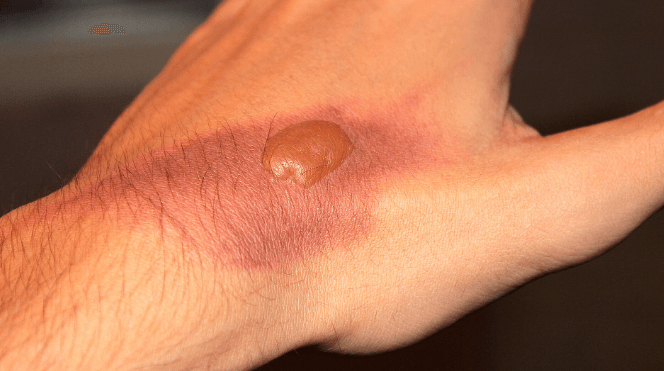
Photo Gallery
Main Article
Types of Burns
Burns are classified into four primary categories: thermal, chemical, electrical, and radiation burns. Thermal burns are the most prevalent type, resulting from exposure to hot liquids, flames, or steam. They are characterized by the depth of tissue damage, which can range from superficial (first-degree) to full-thickness (third-degree) burns. The severity of thermal burns is influenced by factors such as the temperature of the heat source, duration of contact, and the specific body area affected. For instance, burns in sensitive areas like the face or hands may have more significant functional and aesthetic implications than similar burns in less sensitive areas (Sumsuzzman et al., 2020).
Thermal burns can also occur in less obvious locations, such as the oral cavity, where they may manifest as painful ulcers, particularly in elderly patients with diabetes (Kannan et al., 2014; Jadhav & Verma, 2022). These burns often go unnoticed unless they cause significant discomfort, highlighting the need for healthcare professionals to be vigilant about potential thermal injuries in atypical locations. Additionally, thermal burns can occur during medical procedures, such as magnetic resonance imaging (MRI), where conductive materials in clothing can lead to unintended burns due to the heating effects of radiofrequency energy (Prescott, 2023; Tokue et al., 2019; Tang et al., 2021).
Chemical burns occur when skin or mucous membranes come into contact with corrosive substances, leading to tissue destruction that may continue until the chemical is neutralized or removed. Electrical burns, often caused by high-voltage sources, can result in deep tissue damage that is not immediately visible, as the current can cause internal injuries while sparing the skin’s surface. Radiation burns, primarily associated with sun exposure or therapeutic radiation, can lead to skin damage that varies in severity based on exposure duration and intensity (Salehi et al., 2015; Shivanpour et al., 2020; Diego et al., 2013).
Pathophysiology
The pathophysiological changes following a burn injury are complex and vary according to the burn type. Thermal burns cause immediate cellular damage and initiate an inflammatory response, leading to increased vascular permeability and edema. This local response can result in systemic effects, including hypovolemia and shock, particularly in cases of extensive burns (Shabana et al., 2021; Miranda et al., 2020). Chemical burns can induce necrosis and apoptosis in affected tissues, with systemic absorption of toxins potentially leading to multi-organ dysfunction (Eijlers et al., 2019). Electrical burns disrupt cellular membranes and can cause significant muscle and nerve damage, often leading to complications such as compartment syndrome (Cords et al., 2023). Radiation burns primarily affect the skin and underlying tissues, leading to delayed effects such as fibrosis and malignancy (Watzinger, 2024).
Acute Management
Acute management of burns involves several critical interventions tailored to the burn type. For thermal burns, immediate cooling of the burn area with running water for at least 20 minutes is recommended to minimize tissue damage and pain (Wurzer et al., 2016). Chemical burns require prompt irrigation to remove the offending agent, with specific protocols depending on the chemical involved (Duke et al., 2016). Electrical burns necessitate careful assessment for internal injuries, with monitoring for cardiac arrhythmias and renal function due to potential myoglobinuria (Okada et al., 2023). Pain management is essential across all burn types, with opioids often used for severe pain, and adjunct therapies such as virtual reality being explored for their efficacy in reducing anxiety and pain perception (Randall et al., 2015; Ren, 2023). Fluid resuscitation is critical, particularly for burns covering more than 10% of total body surface area (TBSA), following established guidelines such as the Parkland formula (Rakkolainen et al., 2020).
Long-Term Care
Long-term care for burn survivors encompasses a multidisciplinary approach focusing on rehabilitation, scar management, and psychological support. Rehabilitation is vital for restoring function and mobility, with exercise programs tailored to individual needs being shown to improve outcomes (Corte et al., 2016; Duke et al., 2015). Scar management strategies, including the use of silicone gel sheeting and pressure garments, are essential for minimizing hypertrophic scarring and improving cosmetic outcomes (Jeschke et al., 2015; Mason et al., 2019). Psychological care is equally important, as burn survivors often experience post-traumatic stress disorder (PTSD), anxiety, and depression. Support groups and counseling can provide essential emotional support and coping strategies (Subrata, 2020; Delgado-Miguel, 2024).
Precaution
Preventive measures are crucial in burn management to minimize complications and improve outcomes. Healthcare professionals should adhere to strict infection control protocols to prevent burn wound infections, which remain a significant concern (Ahmed et al., 2015; Zadeh et al., 2019). Education on burn prevention, particularly in high-risk populations such as children and the elderly, is essential. This includes promoting safety measures in the home and workplace to reduce the incidence of burns (Khan et al., 2023; Yakout & Khlosy, 2020). Additionally, ongoing training for healthcare providers in burn care best practices can enhance the quality of care delivered to patients (Raipure, 2023).
References:
- Ahmed, H., Eldeen, S., & Tawfeek, F. (2015). Effect of api-tulle dressing versus the conventional dressing technique on the healing of moderate burns. Alexandria Scientific Nursing Journal, 17(2), 129-145. https://doi.org/10.21608/asalexu.2015.208794
- Cords, C., Baar, M., Pijpe, A., Nieuwenhuis, M., Bosma, E., Verhofstad, M., … & Novin, A. (2023). Short-term and long-term increased mortality in elderly patients with burn injury: a national longitudinal cohort study. BMC Geriatrics, 23(1). https://doi.org/10.1186/s12877-022-03669-1
- Corte, W., Dhondt, A., Vanholder, R., Waele, J., Decruyenaere, J., Sergoyne, V., … & Hoste, E. (2016). Long-term outcome in icu patients with acute kidney injury treated with renal replacement therapy: a prospective cohort study. Critical Care, 20(1). https://doi.org/10.1186/s13054-016-1409-z
- Delgado-Miguel, C. (2024). Comparison of the effectiveness of three different skin substitutes for the treatment of pediatric burns.. https://doi.org/10.21203/rs.3.rs-4676446/v1
- Diego, A., Serghiou, M., Padmanabha, A., Porro, L., Herndon, D., & Suman, O. (2013). Exercise training after burn injury. Journal of Burn Care & Research, 34(6), e311-e317. https://doi.org/10.1097/bcr.0b013e3182839ae9
- Duke, J., Boyd, J., Rea, S., Randall, S., & Wood, F. (2015). Long-term mortality among older adults with burn injury: a population-based study in australia. Bulletin of the World Health Organization, 93(6), 400-406. https://doi.org/10.2471/blt.14.149146
- Duke, J., Randall, S., Fear, M., Boyd, J., Rea, S., & Wood, F. (2016). Understanding the long-term impacts of burn on the cardiovascular system. Burns, 42(2), 366-374. https://doi.org/10.1016/j.burns.2015.08.020
- Eijlers, R., Utens, E., Staals, L., Nijs, P., Berghmans, J., Wijnen, R., … & Legerstee, J. (2019). Systematic review and meta-analysis of virtual reality in pediatrics: effects on pain and anxiety. Anesthesia & Analgesia, 129(5), 1344-1353. https://doi.org/10.1213/ane.0000000000004165
- Jadhav, K. and Verma, J. (2022). Burns of oral mucosa – a review. Journal of Dental Specialities, 10(2), 43-47. https://doi.org/10.18231/j.jds.2022.012
- Jeschke, M., Pinto, R., Kraft, R., Nathens, A., Finnerty, C., Gamelli, R., … & Herndon, D. (2015). Morbidity and survival probability in burn patients in modern burn care*. Critical Care Medicine, 43(4), 808-815. https://doi.org/10.1097/ccm.0000000000000790
- Kannan, S., Chandrasekaran, B., Muthusamy, S., Sidhu, P., & Suresh, N. (2014). Thermal burn of palate in an elderly diabetic patient. Gerodontology, 31(2), 149-152. https://doi.org/10.1111/ger.12010
- Khan, A., Bhuiyan, S., & Hossain, Z. (2023). Priming factors related to burn injury among people in bangladesh. Journal of Health and Allied Sciences Nu, 14(01), 102-105. https://doi.org/10.1055/s-0043-1766126
- Mason, S., Nathens, A., Byrne, J., Diong, C., Fowler, R., Karanicolas, P., … & Jeschke, M. (2019). Increased rate of long-term mortality among burn survivors. Annals of Surgery Open, 269(6), 1192-1199. https://doi.org/10.1097/sla.0000000000002722
- Miranda, E., Velin, L., Ntirenganya, F., Riviello, R., Mukagaju, F., Shyaka, I., … & Pompermaier, L. (2020). Recording patient data in burn unit logbooks in rwanda: who and what are we missing?. Journal of Burn Care & Research, 42(3), 526-532. https://doi.org/10.1093/jbcr/iraa198
- Okada, K., Ohde, S., Yagi, T., Hara, Y., & Yokobori, S. (2023). Development and validation of prediction scores for the outcome associated with persistent inflammation, immunosuppression, and catabolism syndrome among patients with trauma. Trauma Surgery & Acute Care Open, 8(1), e001134. https://doi.org/10.1136/tsaco-2023-001134
- Prescott, S. (2023). Magnetic resonance imaging burn injury from metal eyelets on patient’s clothing. Bjr|case Reports. https://doi.org/10.1259/bjrcr.20230088
- Raipure, A. (2023). Effectiveness of early physiotherapy rehabilitation approach for split skin grafting post-burn in a pediatric patient. Cureus. https://doi.org/10.7759/cureus.44083
- Rakkolainen, I., Mustonen, K., & Vuola, J. (2020). Long-term outcome after renal replacement therapy in severe burns. Journal of Burn Care & Research, 41(4), 866-870. https://doi.org/10.1093/jbcr/iraa034
- Randall, S., Fear, M., Wood, F., Rea, S., Boyd, J., & Duke, J. (2015). Long-term musculoskeletal morbidity after adult burn injury: a population-based cohort study. BMJ Open, 5(9), e009395. https://doi.org/10.1136/bmjopen-2015-009395
- Ren, Y. (2023). A 94-year-old patient with severe burns: a case report. World Journal of Emergency Medicine, 14(3). https://doi.org/10.5847/wjem.j.1920-8642.2023.058
- Salehi, S., Kamran, A., Tabatabaeenezhad, S., Naderan, M., & Shoar, S. (2015). Prevalence of hiv infection among burn patients: is there a relationship with patients’ outcomes?. International Wound Journal, 14(1), 85-88. https://doi.org/10.1111/iwj.12555
- Shabana, E., Shehata, A., Abd-Elghafar, S., & Shehata, O. (2021). Effect of multimedia self-care strategy on outcomes among patients with burn. Menoufia Nursing Journal, 6(1), 51-71. https://doi.org/10.21608/menj.2021.169880
- Shivanpour, M., Firouzkouhi, M., Naderifar, M., & Mohammadi, M. (2020). Nurses experiences in the burn unit: a qualitative research. Iranian Journal of Nursing and Midwifery Research, 25(3), 232. https://doi.org/10.4103/ijnmr.ijnmr_162_19
- Smolle, C., Cambiaso‐Daniel, J., Forbes, A., Wurzer, P., Hundeshagen, G., Branski, L., … & Kamolz, L. (2017). Recent trends in burn epidemiology worldwide: a systematic review. Burns, 43(2), 249-257. https://doi.org/10.1016/j.burns.2016.08.013
- Subrata, S. (2020). A concept analysis of burn care in nursing. Scandinavian Journal of Caring Sciences, 35(1), 75-85. https://doi.org/10.1111/scs.12847
- Sumsuzzman, D., Choi, J., Khan, Z., & Hong, Y. (2020). Protective effects of melatonin against severe burn-induced distant organ injury: a systematic review and meta-analysis of experimental studies. Antioxidants, 9(12), 1196. https://doi.org/10.3390/antiox9121196
- Tang, M., Okamoto, K., Haruyama, T., & Yamamoto, T. (2021). Electromagnetic simulation of rf burn injuries occurring at skin-skin and skin-bore wall contact points in an mri scanner with a birdcage coil. Physica Medica, 82, 219-227. https://doi.org/10.1016/j.ejmp.2021.02.008
- Tokue, H., Tokue, A., & Tsushima, Y. (2019). Unexpected magnetic resonance imaging burn injuries from jogging pants. Radiology Case Reports, 14(11), 1348-1351. https://doi.org/10.1016/j.radcr.2019.08.015
- Watzinger, N. (2024). Long-term functional outcomes after hand burns: a monocentric controlled cohort study. Journal of Clinical Medicine, 13(12), 3509. https://doi.org/10.3390/jcm13123509
- Wurzer, P., Voigt, C., Clayton, R., Andersen, C., Mlcak, R., Kamolz, L., … & Suman, O. (2016). Long-term effects of physical exercise during rehabilitation in patients with severe burns. Surgery, 160(3), 781-788. https://doi.org/10.1016/j.surg.2016.04.028
- Yakout, R. and Khlosy, H. (2020). Range of motion exercises effect during and after hydrotherapy on patients burned hand function and pain intensity: a comparative study. Egyptian Journal of Health Care, 11(3), 670-687. https://doi.org/10.21608/ejhc.2020.169807
- Zadeh, N., Mohammadi, F., Rarani, M., Javadi, M., Mohammadzade, M., & Yazdi-Feyzabadi, V. (2019). How the service delivery works in the iranian specialised burns hospitals? a qualitative approach. Plos One, 14(5), e0216489. https://doi.org/10.1371/journal.pone.0216489