


Quick Overview
Associated References
Associated Care Plans/Tutorials
Associated Products
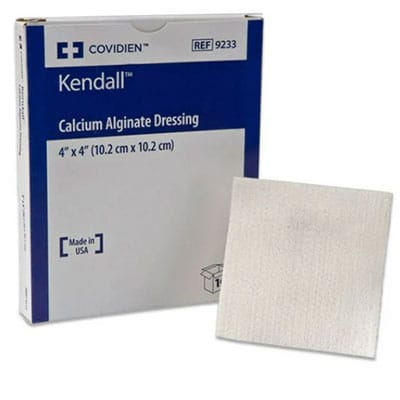
Photo Gallery

Main Article
History
Alginate dressings have a history that traces back to the early 1980s when they were first introduced into clinical practice. Derived from the cell walls of brown seaweed, alginate has been recognized for its biocompatibility and ability to form hydrogels upon contact with moisture, making it an ideal candidate for wound care applications (Sangkaew et al., 2022). The initial use of alginate in wound dressings was primarily for its hemostatic properties, which facilitated the management of exuding wounds. Over the years, advancements in material science have led to the development of various formulations of alginate dressings that enhance their efficacy and broaden their application spectrum (Xie et al., 2022).
The evolution of alginate dressings has been marked by significant research into their chemical properties and biological interactions. Studies have demonstrated that alginate can be modified to improve its mechanical strength and degradation rates, allowing for tailored applications in diverse wound types (Fonseca et al., 2013). Furthermore, the integration of antimicrobial agents, such as silver, into alginate dressings has been explored to combat infection in chronic wounds, showcasing the adaptability of alginate-based materials in modern wound care (Meekul et al., 2017).
Mechanism of Action
Alginate dressings operate through a unique mechanism that involves the absorption of wound exudate and the formation of a gel-like matrix. When applied to a wound, alginate fibers interact with the moisture present, leading to the release of calcium ions that facilitate cross-linking and gel formation (Huang et al., 2022). This gel not only absorbs excess exudate but also maintains a moist environment conducive to healing, which is critical for cellular migration and tissue regeneration (Sangkaew et al., 2022).
The ability of alginate to absorb exudate is particularly beneficial in managing highly exuding wounds, as it prevents maceration of surrounding tissue and reduces the risk of infection (Naik et al., 2013). Additionally, the gel formed by alginate provides a protective barrier against external contaminants while allowing for gas exchange, which is essential for wound healing (Xie et al., 2022). The biocompatibility of alginate ensures that it does not elicit an adverse inflammatory response, further promoting a favorable healing environment (Shin et al., 2020).
Clinical Uses
Alginate dressings are particularly suitable for a variety of wound types, including but not limited to, highly exuding wounds, pressure ulcers, and infected wounds. Their high absorbency makes them ideal for managing wounds that produce significant amounts of exudate, such as venous ulcers and surgical wounds (Naik et al., 2013). Clinical studies have shown that alginate dressings can effectively reduce wound size and promote healing in patients with chronic non-healing ulcers, demonstrating their efficacy in challenging cases (Meekul et al., 2017).
In the context of pressure ulcers, alginate dressings have been found to facilitate faster healing compared to traditional dressings, owing to their moisture-retentive properties and ability to manage exudate effectively (Monteiro, 2024). Furthermore, the incorporation of silver ions into alginate dressings has been shown to enhance their antimicrobial properties, making them suitable for use in infected wounds (Meekul et al., 2017). This versatility underscores the importance of alginate dressings in contemporary wound management protocols.
Brands of Alginate Dressings
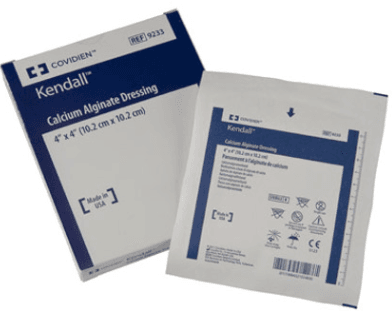
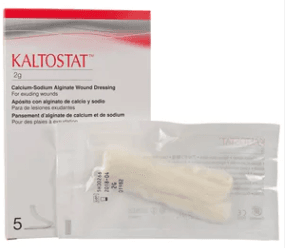
Several commercially available alginate dressing products have gained prominence in clinical settings. Notable brands include Sorbsan, Kaltostat, and Algikura-Cremer, each offering unique formulations tailored to specific wound care needs (Monteiro, 2024). Sorbsan, for instance, is recognized for its high absorbency and ability to form a gel that conforms to the wound bed, promoting healing while minimizing pain during dressing changes (Sangkaew et al., 2022). Kaltostat is another widely used alginate dressing that is particularly effective in managing exuding wounds and is often used in conjunction with other therapeutic agents to enhance healing outcomes (Monteiro, 2024).
The diversity in alginate dressing products allows healthcare professionals to select the most appropriate dressing based on the specific characteristics of the wound, such as the level of exudate, the presence of infection, and the overall condition of the surrounding skin (Zhang et al., 2021). This tailored approach is essential for optimizing patient outcomes and ensuring effective wound management.
Precautions for Use
While alginate dressings are generally safe and effective, certain precautions must be observed to ensure their optimal use. Contraindications include the presence of dry wounds, third-degree burns, or wounds with exposed tendons or bones, as alginate dressings require moisture to function effectively (Meekul et al., 2017). Additionally, patients with a known allergy to alginate or any of its components should avoid these dressings to prevent adverse reactions (Meekul et al., 2017).
Potential complications associated with alginate dressings include the risk of excessive moisture retention, which can lead to maceration of surrounding skin if not monitored closely (Huang et al., 2022). It is crucial for healthcare professionals to assess the wound regularly and change the dressing as needed to prevent complications. Furthermore, the integration of antimicrobial agents, while beneficial, should be approached with caution to avoid potential cytotoxic effects on healing tissues (Xie et al., 2022).
In conclusion, alginate dressings represent a significant advancement in wound care management, offering unique properties that facilitate healing in a variety of clinical scenarios. Their ability to absorb exudate, maintain a moist environment, and adapt to different wound types underscores their importance in modern healthcare practices. As research continues to evolve, the potential applications and formulations of alginate dressings are likely to expand, further enhancing their role in effective wound management.
References:
- Fonseca, K., Maia, F., Cruz, F., Andrade, d., Juliano, M., Granja, P., … & Barrias, C. (2013). Enzymatic, physicochemical and biological properties of mmp-sensitive alginate hydrogels. Soft Matter, 9(12), 3283. https://doi.org/10.1039/c3sm27560d
- Huang, C., Dong, L., Zhao, B., Lü, Y., Huang, S., Yuan, Z., … & Qian, W. (2022). Anti‐inflammatory hydrogel dressings and skin wound healing. Clinical and Translational Medicine, 12(11). https://doi.org/10.1002/ctm2.1094
- Meekul, J., Chotirosniramit, A., Himakalasa, W., Orrapin, S., Wongthanee, A., Pongtam, O., … & Kulprachakarn, K. (2017). A randomized controlled trial on the outcome in comparing an alginate silver dressing with a conventional treatment of a necrotizing fasciitis wound. The International Journal of Lower Extremity Wounds, 16(2), 108-113. https://doi.org/10.1177/1534734617701051
- Monteiro, R. (2024). Porous and dense alginate/chitosan composite films loaded with simvastatin for dressing applications. Coatings, 14(3), 278. https://doi.org/10.3390/coatings14030278
- Naik, B., Kulkarni, S., Narayana, S., & Prabusankar, P. (2013). A comparative study of efficacy of silver & calcium alginate wound dressing vs povidone-iodine wound dressing in chronic non-healing ulcers. Journal of Evolution of Medical and Dental Sciences, 2(23), 4173-4176. https://doi.org/10.14260/jemds/818
- Sangkaew, S., Wanmasae, S., Bunluepeuch, K., Ongtanasup, T., Srisang, S., Manaspon, C., … & Eawsakul, K. (2022). Development of nanoemulsions for wound dressings containing cassia alata l. leaf extraction. Evidence-Based Complementary and Alternative Medicine, 2022, 1-19. https://doi.org/10.1155/2022/4282678
- Shin, D., Park, J., Choi, M., Kim, S., Kim, H., & Jeong, S. (2020). Polydeoxyribonucleotide-delivering therapeutic hydrogel for diabetic wound healing. Scientific Reports, 10(1). https://doi.org/10.1038/s41598-020-74004-0
- Xie, G., Wang, X., Mo, M., Zhang, L., & Zhu, J. (2022). Photothermal hydrogels for promoting infected wound healing. Macromolecular Bioscience, 23(2). https://doi.org/10.1002/mabi.202200378
- Xie, Y., Gao, P., He, F., & Zhang, C. (2022). Application of alginate-based hydrogels in hemostasis. Gels, 8(2), 109. https://doi.org/10.3390/gels8020109
- Zhang, K., Wang, Y., Wei, Q., Li, X., Guo, Y., & Zhang, S. (2021). Design and fabrication of sodium alginate/carboxymethyl cellulose sodium blend hydrogel for artificial skin. Gels, 7(3), 115. https://doi.org/10.3390/gels7030115